Private intelligence. On your terms.Documentation

StenoAI for Law Enforcement

Notes that stay inside the force.

Briefings, investigation reviews, witness contact and command meetings carry personal data your force is accountable for under Part 3 of the Data Protection Act 2018. StenoAI records, transcribes and summarises on the laptop in the room, or on infrastructure the force controls. It is not an interview recorder and never replaces your authorised PACE equipment.

Your device or your infrastructureNo meeting botOpen source
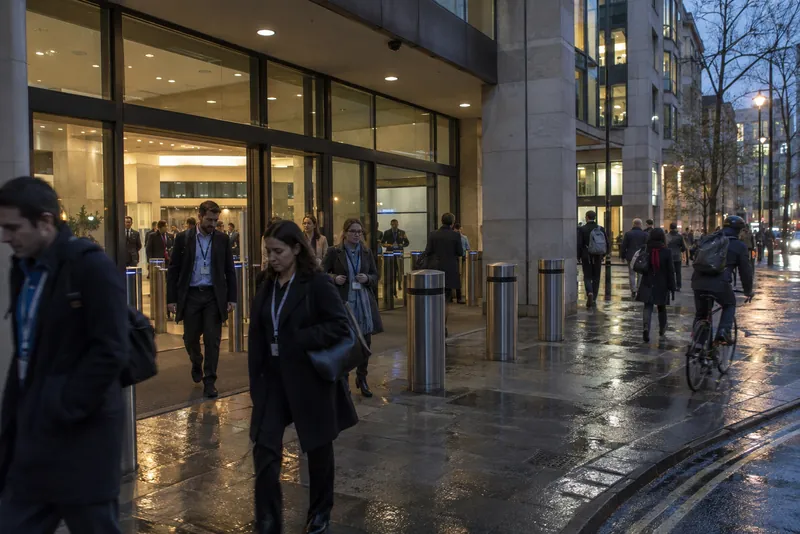
Officers in a briefing room

01 / Where it is used

Illustrative settings · 8

Where it is used,
room by room.

Settings where the conversation can’t be handed to a cloud vendor, and the record StenoAI produces in each, on your device or your infrastructure.

  1. LE-01Your device

    Witness and victim first accounts

    A verbatim record before the statement is drafted.

    ForInvestigators, statement takers, victim liaison

    • Verbatim transcript
    • Statement outline
    • Actions
  2. LE-02Force network

    Investigation reviews and SIO briefings

    Decisions and rationale, ready for the policy file.

    ForSenior investigating officers, review teams, disclosure officers

    • Decision log
    • Policy-file entries
    • Actions
  3. LE-03Your device

    Gold, silver and bronze command

    A decision log grounded in what was said.

    ForCommand teams, public order and event planners

    • Decision log
    • Rationale record
    • Taskings
  4. LE-04Your device

    Professional standards and misconduct meetings

    Sensitive personnel data kept off vendor servers.

    ForProfessional standards departments, HR, staff associations

    • Transcript
    • Meeting note
    • Actions
  5. LE-05Your cloud tenancy

    Multi-agency safeguarding meetings

    One record for the room, held by the chair.

    ForMASH teams, MARAC and MAPPA coordinators

    • Draft minutes
    • Actions by agency
    • Risk notes
  6. LE-06Force network

    Intelligence and tasking meetings

    Ask across every meeting, inside the force boundary.

    ForIntelligence units, tasking and coordination groups

    • Local archive
    • Tasking log
    • Questions and answers
  7. LE-07Your device

    Debriefs and training

    Learning captured while it is fresh.

    ForPublic order trainers, incident debrief leads

    • Debrief note
    • Learning points
    • Actions
  8. LE-08Force network

    Force IT and secure deployment

    Review the source, build it, stage it.

    ForForce IT, information security, DPOs

    • Build from source
    • Offline models
    • No content egress (local mode)

02 / Why now · Public record

Verified October 2026

Policing is adopting AI, and asking where the data goes.

Government is funding AI across policing, and note taking is named among the priorities. The covenant every chief signed says a human decides. Both point the same way: transcript first, inside the force.

  1. Sep 2023 NPCC

    A human is the ultimate decision-maker

    The NPCC Covenant for Using AI in Policing, endorsed by all members on 28 September 2023, says all AI that affects the public must have a human as the ultimate decision-maker.

  2. Mar 2025 Surrey and Sussex

    Forces are buying transcription

    The Police and Crime Commissioner for Sussex published a planned procurement for an automated transcription solution for Surrey and Sussex Police, estimated at £100,000 excluding VAT.

  3. Jun 2026 Home Office

    Note taking named as a priority use

    The Home Office factsheet lists note taking and transcribing witness statements among back-office uses, and says police AI deployments must be lawful, ethical and transparent.

  4. Jun 2026 Home Office

    £75 million for PoliceAI

    PoliceAI is backed by £75 million over three years, with large-scale pilots in up to 10 forces over 2026-27 before scaling to all forces.

03 / Structural risk

3 points

Why cloud tools don’t fit.

  • Cloud notetakers route audio through servers you must name in a DPIA and cannot inspect.
  • A bot on the call is a participant you cannot account for in a command or safeguarding meeting.
  • Recordings and drafts held under a vendor's terms sit outside your CPIA retention and disclosure rules.

No processor in the audio path

In local mode, capture, transcription and summarisation run on the device. There is no vendor system holding the audio, so there is no processor contract to manage for it.

A transcript behind every summary

Summaries are drafts. The verbatim transcript is kept alongside, so every decision log entry can be checked against what was actually said.

Your retention, your disclosure

Recordings, transcripts and summaries are ordinary local files your disclosure officer can retain, schedule and reveal under your own rules.

Built to be scrutinised

Open source. Force IT and information security can read the code, build it themselves and test it before deployment.

04 / Law & policy

Verified October 2026

The law, and what stays with you.

None of this is legal advice, and no tool hands you compliance. These are the rules a police DPO, disclosure officer and information security lead will test the design against.

DPA 2018 · Part 3 · ss. 59, 62, 64, 66

It says
Controllers may use only processors giving sufficient guarantees (s.59); automated systems keep logs of collection, consultation, disclosure and erasure (s.62); high-risk processing needs a DPIA (s.64); security must match the risk (s.66).
So
In local mode there is no processor in the audio path and no vendor system holding meeting content.
Still yours
Your DPIA, logging on the systems you move notes into, and endpoint security.

PACE 1984 · Code E

It says
An authorised recording device, if available, must be used to record a suspect interview.
So
StenoAI is not that device and is never presented as one.
Still yours
Deciding, with legal and professional standards, which non-interview settings it may be used in.

CPIA 1996 · Code of Practice para 5.4

It says
Material to retain includes notes by an investigator relating to contact with suspects, victims or witnesses, and records of interviews with potential witnesses.
So
Recordings, transcripts and summaries are ordinary local files your disclosure officer can retain and schedule. No vendor holds or deletes them.
Still yours
Applying retention periods and revealing material to the prosecutor.

05 / Case files · Public record

Verified September 2026

What happens when the record can't be checked

Neither policing case below was a hack. In one, a force leaned on an assistant's output it could not check; in the other, a file carried more than anyone meant it to. Both are about where the record lives and what it can be checked against.

Case 01 West Midlands Police · 2025–2026

A chatbot's fixture that never happened

West Midlands Police relied in part on Microsoft Copilot output describing a football match that had never taken place, in advice that fed a decision to ban away fans from a fixture. After the error came to light, the Chief Constable retired and the assistant was switched off across the force.

What StenoAI changes

Any language model can get things wrong, including the one StenoAI runs. The difference is what the output can be checked against: StenoAI summarises only what was said in the meeting, and keeps the verbatim transcript next to every summary, so a claim in the notes can be traced to the words behind it — or found to have none.

The Register, February 2026 (opens in a new tab)

Case 02 Police Service of Northern Ireland · 2023, fined 2024

A hidden tab in an FOI response

In August 2023 PSNI published a spreadsheet in response to a Freedom of Information request. A hidden tab held the surnames, initials, ranks and roles of all 9,483 officers and staff. The Information Commissioner fined the service £750,000 in October 2024.

What StenoAI changes

No software stops a person releasing the wrong file, and StenoAI doesn't claim to. What it avoids is adding copies: no vendor-side duplicate of your meetings, no automatic sync, no export in the pipeline. The notes sit on a device under the controls you already run.

ICO, October 2024 (opens in a new tab)

Case 03 Otter.ai litigation · 2025

The notetaker itself became the exposure

Class actions consolidated as In re Otter.AI Privacy Litigation in the Northern District of California allege that the AI notetaker joined calls and recorded participants who were not its customers, transmitted call content to its servers, and used those conversations to train its models. The claims are unproven and Otter.ai disputes them.

What StenoAI changes

Once a notetaker sends audio off the device, consent, retention and model training become somebody else's policy. In local mode StenoAI never sends the audio anywhere, so those questions stay with the force.

NPR, August 2025 (opens in a new tab)

Each incident is a matter of public record, summarised from the linked source and verified September 2026. StenoAI is not affiliated with any organisation named here.

06 / Not for

4 lines

What it is not for.

Lines StenoAI does not cross, and is never presented as crossing.

Suspect interviews under PACE

Interviews with suspects use your authorised recording device under Code E. StenoAI is not that device.

Covert material

Not for product obtained under covert powers.

Body-worn video

It does not analyse or transcribe body-worn footage.

Sole basis for a decision

Summaries are drafts. A person decides, on the transcript and the evidence.

On compliance

In local mode, StenoAI runs entirely on your device. Your meeting recordings, transcripts, and summaries never reach our servers — there is no third-party processor handling your meeting data, which addresses a meaningful part of HIPAA, GDPR, and data-residency exposure. (Those frameworks also cover safeguards, agreements, and processes that remain your responsibility — no tool hands you compliance.) StenoAI itself isn't a certified cloud service, because there is no cloud service handling your meetings to certify — and that's the point: the vendor-breach risk that frameworks such as SOC 2 exist to assure against isn't in that path.

07 / Questions

Questions your
security team will ask.

01Can StenoAI be used to record suspect interviews?

No. Interviews with suspects under caution must be recorded on your authorised recording device under PACE Code E. StenoAI is for the work around an investigation — briefings, reviews, command and partner meetings — under your force policy.

02Does it add a data processor under Part 3 of the DPA 2018?

In local mode there is no processor in the audio path: recording, transcription and summarisation happen on the device. If you configure a model server, it is one your force operates or contracts for. Your DPIA, records of processing and endpoint security remain your responsibility.

03Can it run on force infrastructure rather than individual laptops?

Yes. Transcription runs on the device by default, and summaries can run on a model server on the force network or in the force's own cloud tenancy. It also runs fully offline on an isolated machine.

04How do we evaluate it?

Download the open-source app for a single-officer evaluation, have your information security team review and build the source, or request a briefing to discuss a force deployment.

Your next conversation deserves better.

Keep the record.
Keep control.

See what private meeting intelligence
can do for your organisation.

Request a briefing Download the open-source app
Your device or your infrastructure. Never ours.macOS · Windows alpha